Montessori Kids Bookcases
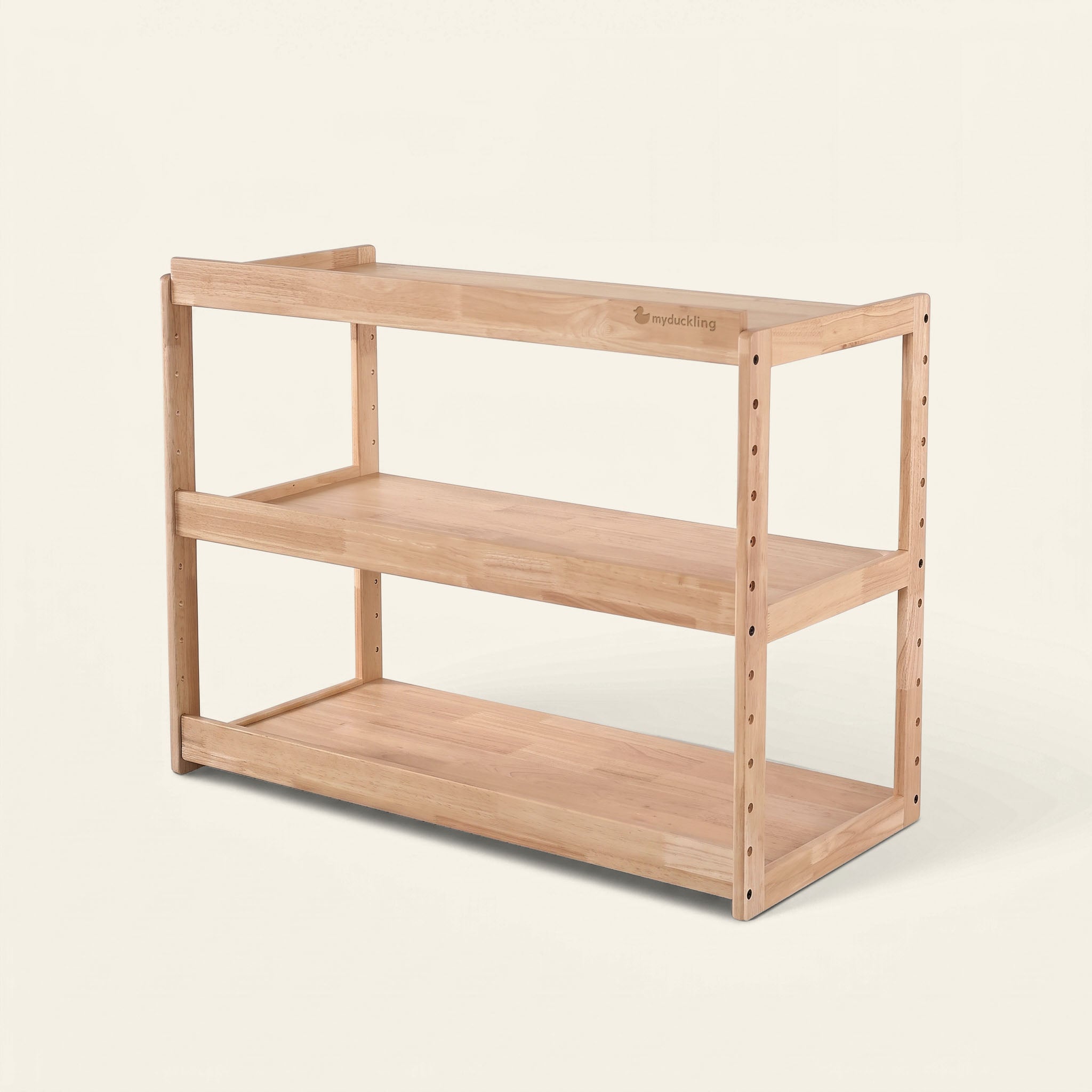
myduckling's bookshelves offer adjustable heights, superior stability, and easy access design, making them versatile and adaptable as your child grows.
Sort by
Filters
Choosing the Right Bookcase for Your Child
Browse our most frequently asked questions about kids bookshelves. Learn about the difference between rotating and front-facing styles.
What is a Montessori bookshelf and why is it better for kids than a regular bookcase?
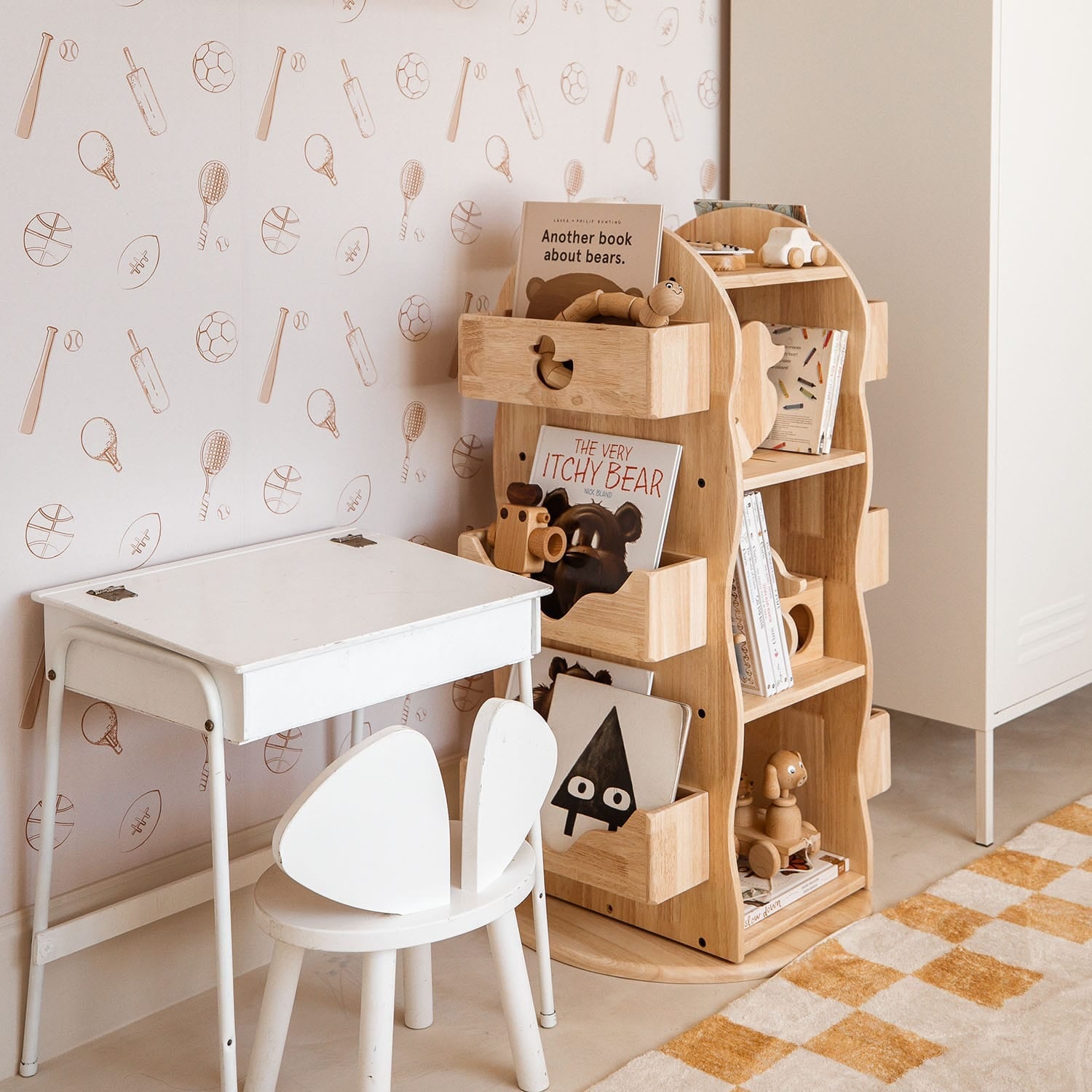
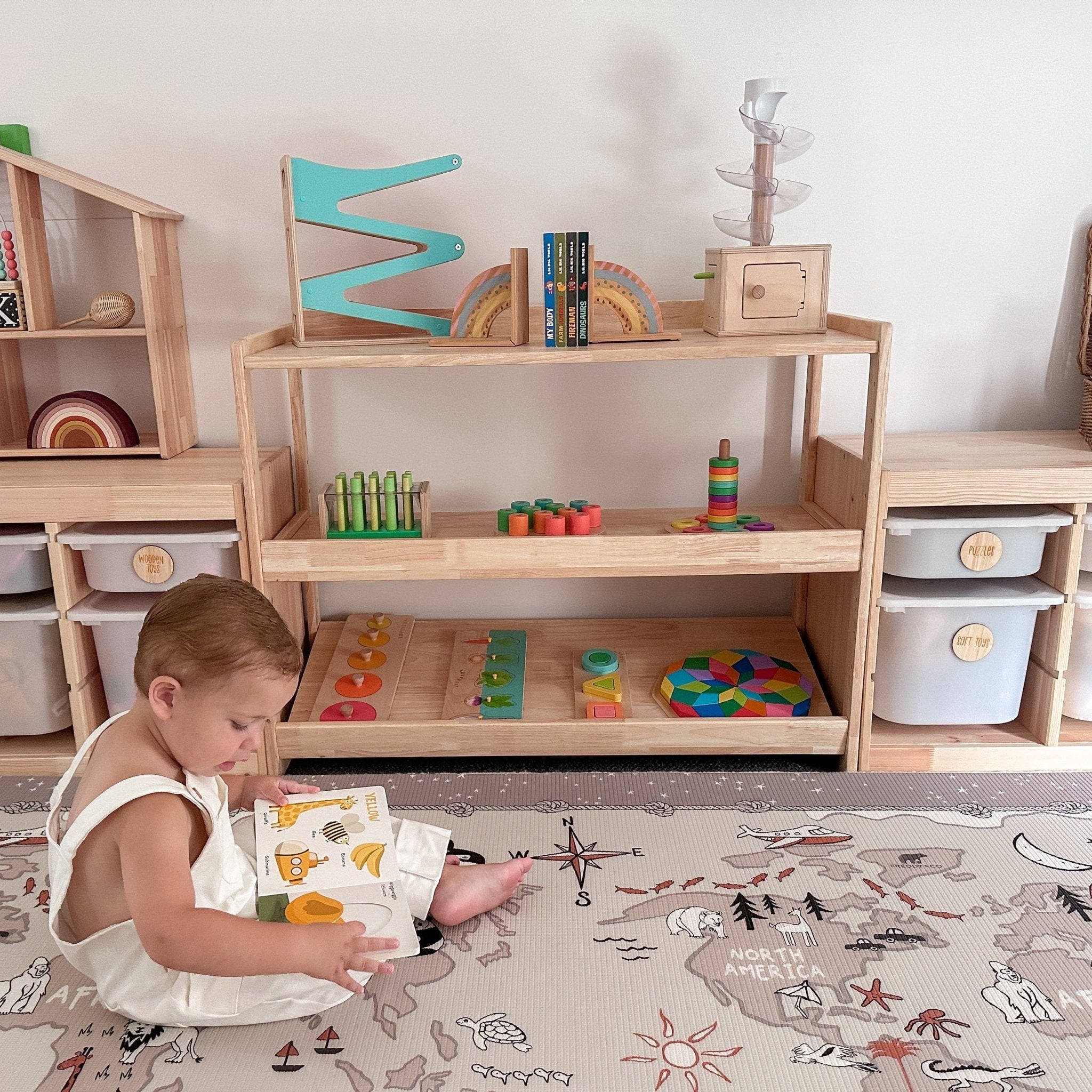
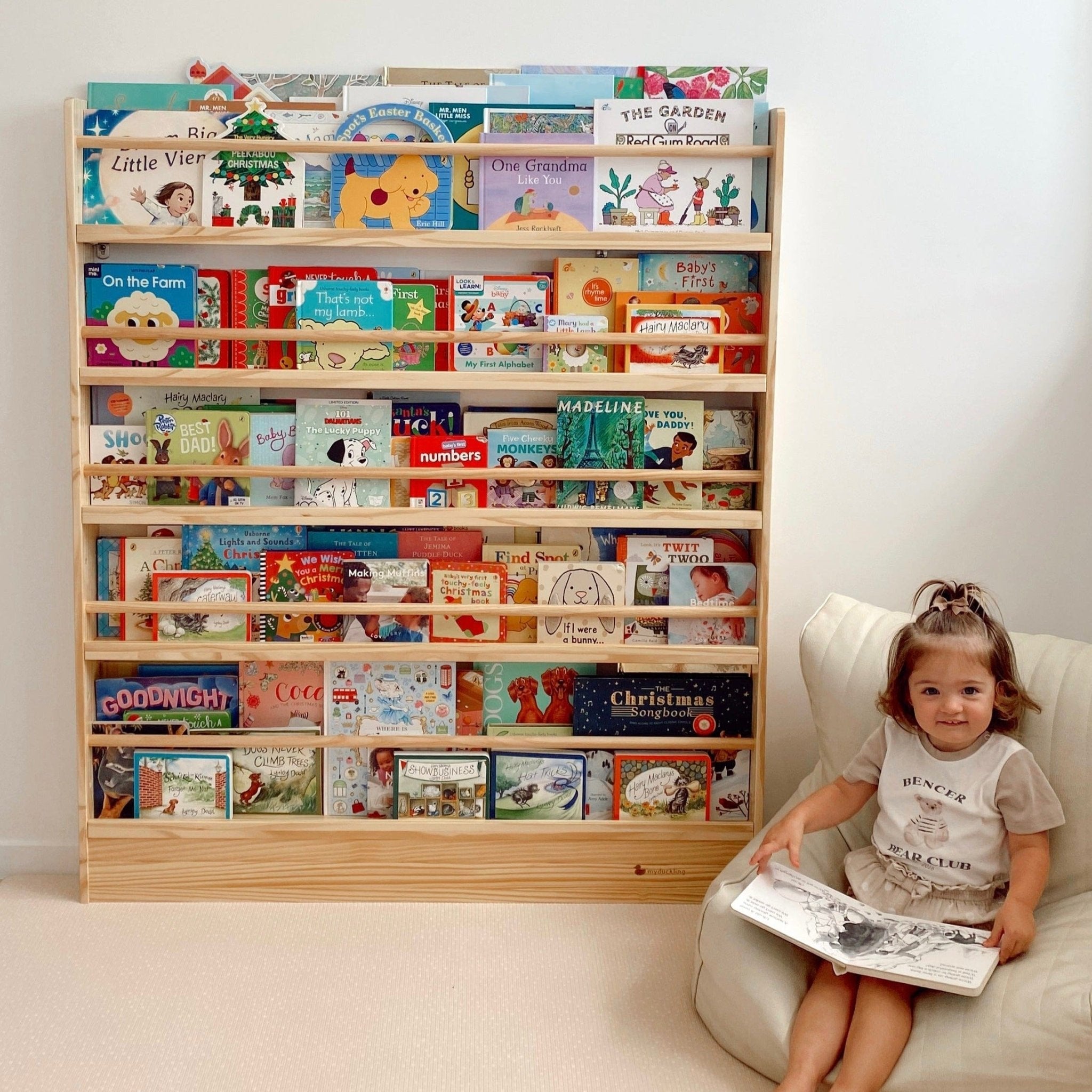
A Montessori bookshelf is a child-height, open-access bookcase designed to let children independently see, reach, and choose their own books without adult help.
Unlike tall conventional bookcases that display only book spines, Montessori-style shelves use either a front-facing design that shows full book covers or a 360-degree rotating design that provides access from all sides.
This visibility is key to the Montessori philosophy of fostering independence, curiosity, and early literacy habits in children as young as 12 months.
All four bookshelves in the myduckling collection are crafted from FSC-certified solid wood — pinewood, rubberwood, or beech — with CPC-certified non-toxic finishes, meeting U.S. children's product safety standards.
Based on parent feedback, a frequently praised benefit is how children naturally gravitate toward reading when books are displayed at their eye level rather than hidden on high shelves.
What's the difference between a rotating bookshelf and a front-facing bookshelf?
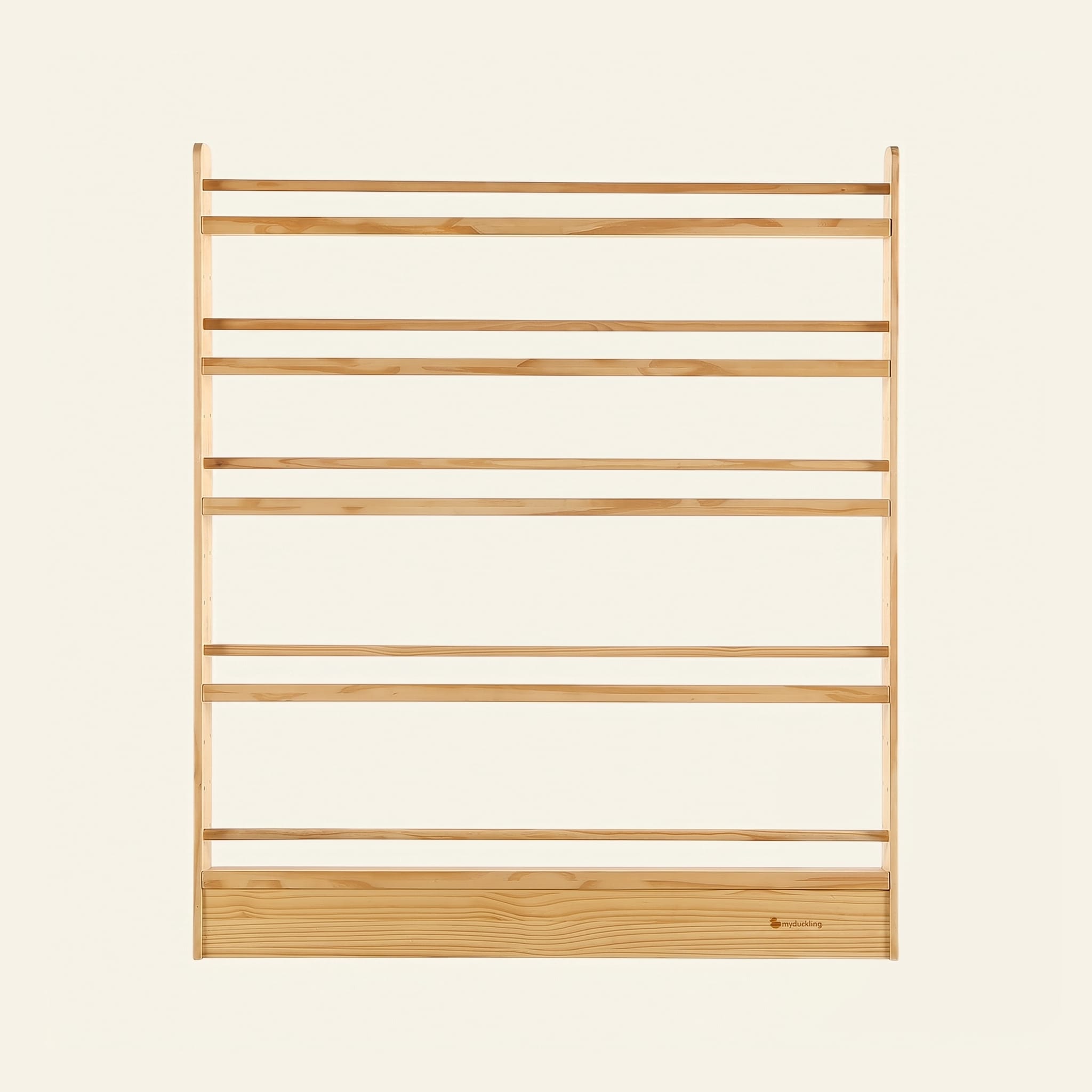
A rotating bookshelf spins 360 degrees on a fixed base and stores books vertically in deep compartments accessible from all sides, while a front-facing bookshelf mounts flat against a wall and displays book covers outward on shallow, tiered shelves.
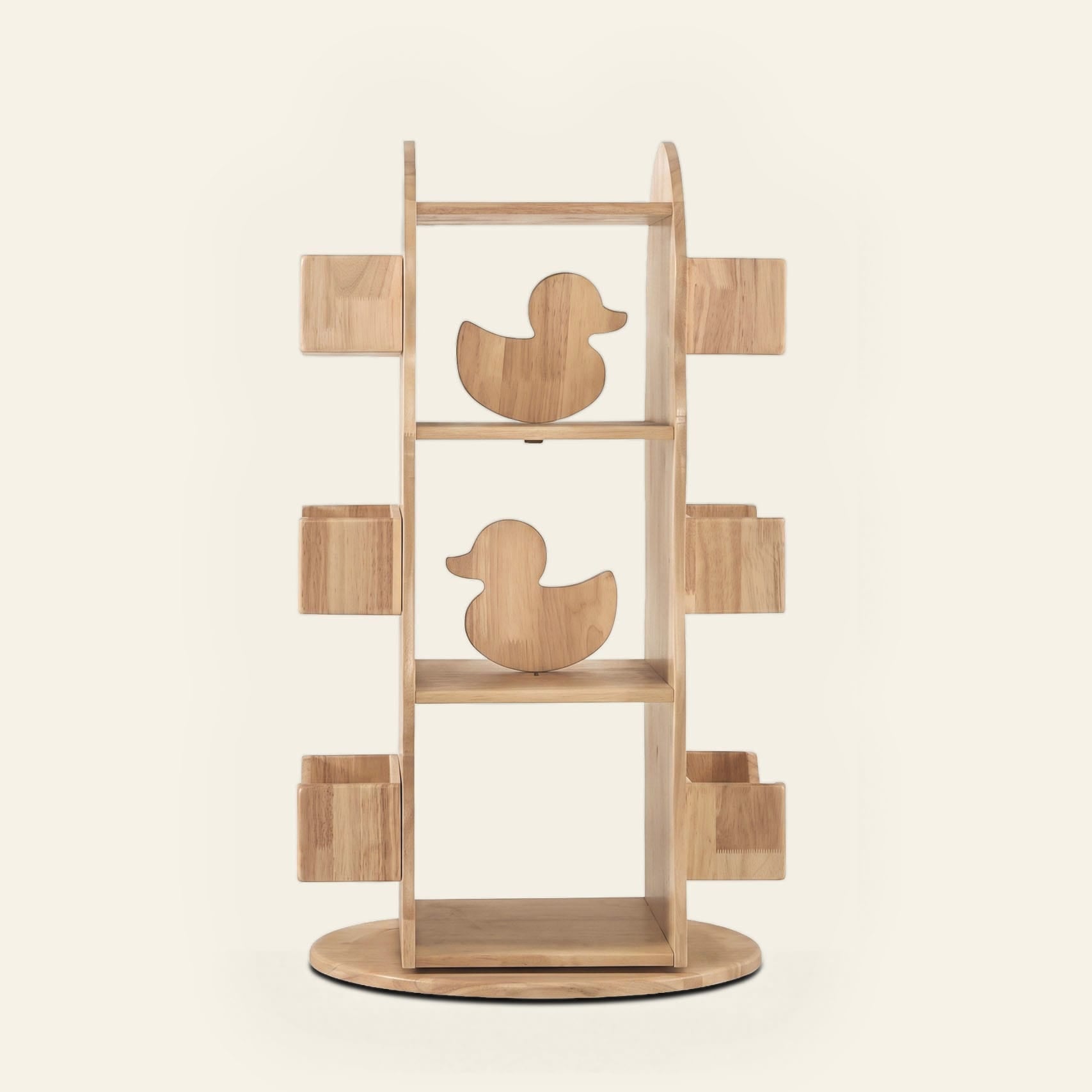
· The myduckling BINDI rotating bookcase ($499) holds up to 300 books within a 21.7-inch diameter footprint.
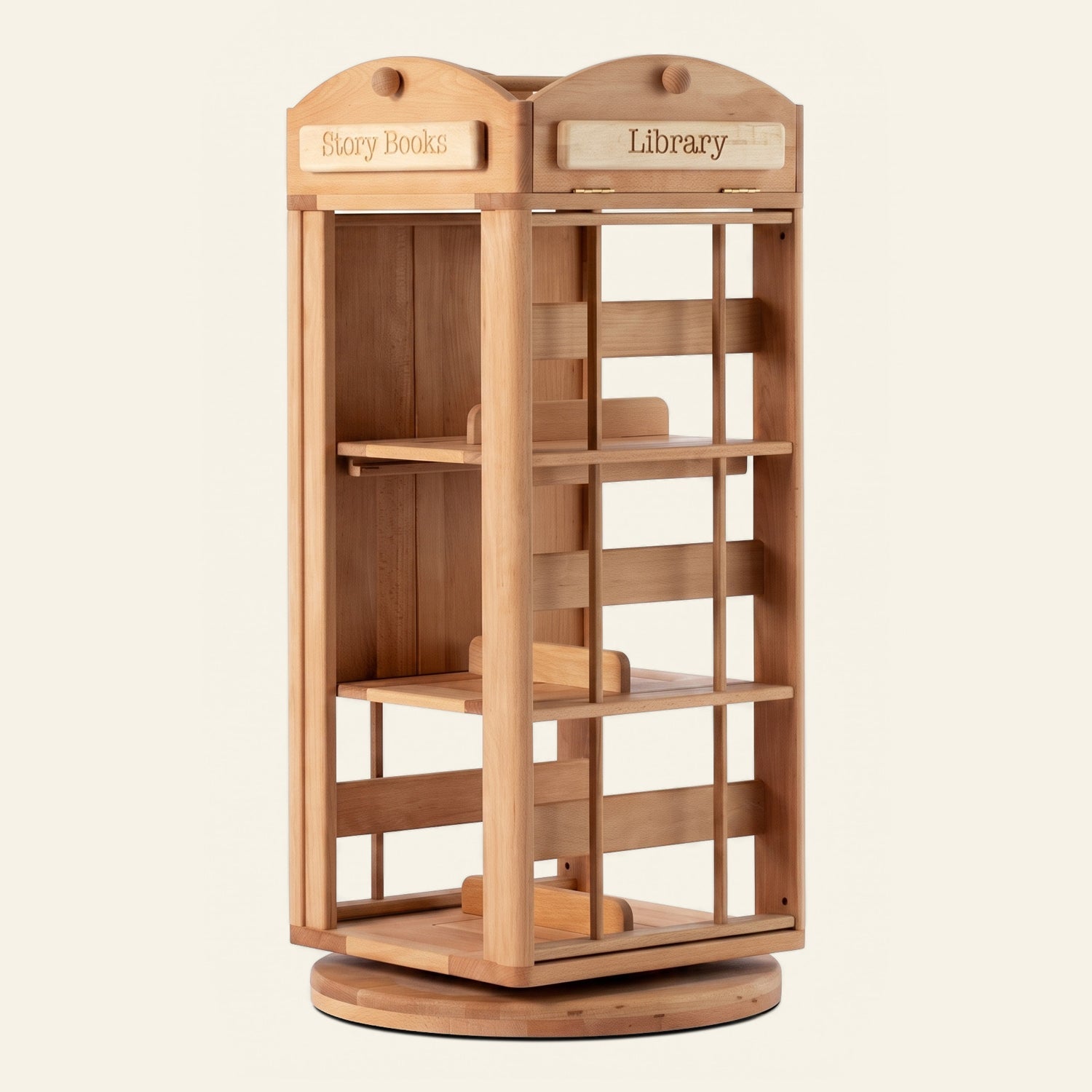
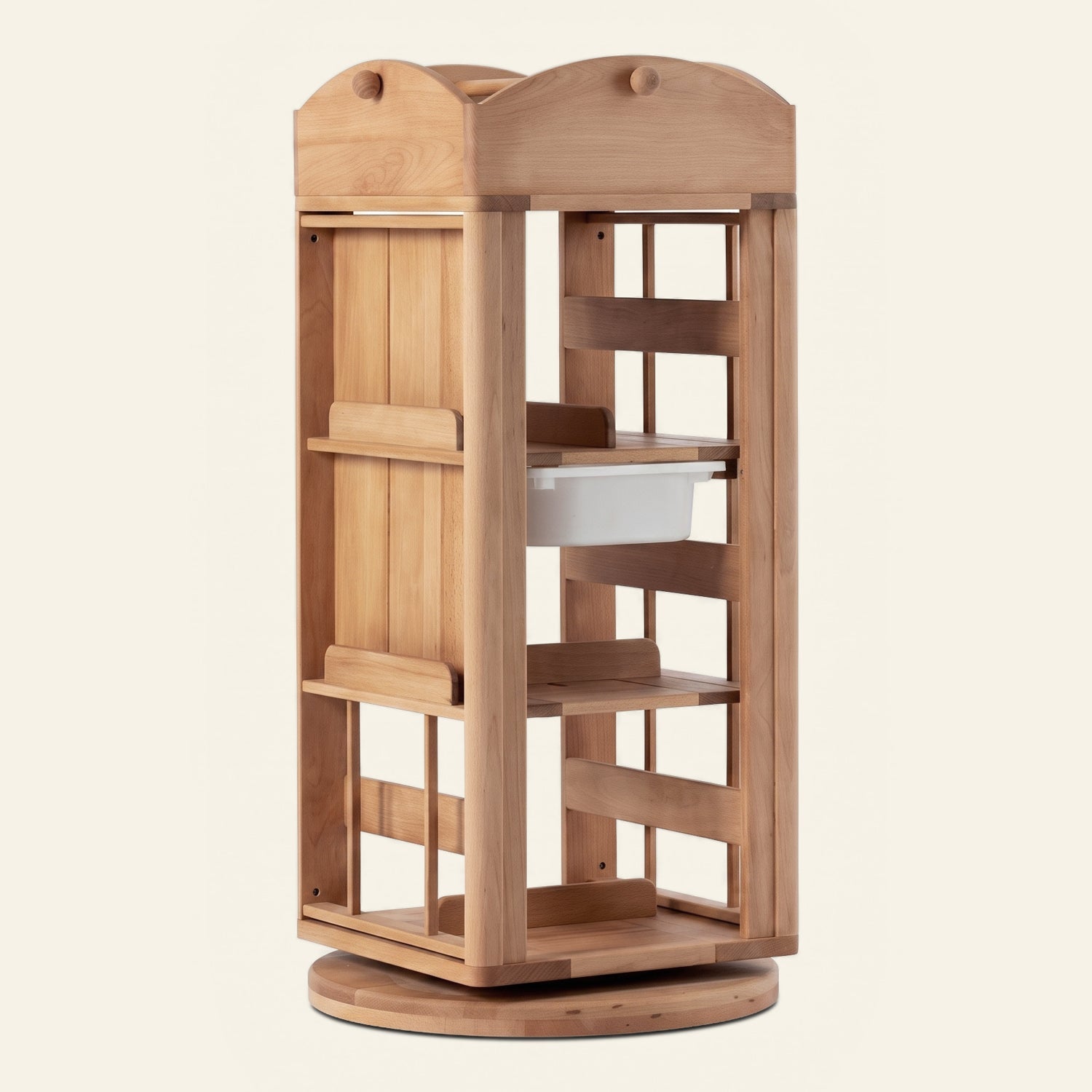
· The OLI Library model ($699) stores up to 350 books in a 23.6-inch base — ideal for small rooms or corners.
· The NALA front-facing bookshelf ($119–$179) is slimmer at just 4.72 inches deep, designed for wall-mounted use with adjustable 3-tier or 5-tier configurations.
Parents of toddlers aged 1–3 tend to prefer front-facing shelves because visible covers help pre-readers choose books independently, while families with larger collections or school-aged children often choose rotating models for their superior storage capacity and space efficiency.
How many books can a kids rotating bookshelf hold?
The myduckling rotating bookshelves hold between 300 and 350 books depending on the model.
· BINDI Revolving Solid Wood Bookcase stores up to 300 books across three shelf tiers within a compact 21.7-inch diameter base, weighing 59.5 pounds for stability.
· The OLI Library Revolving Bookcase holds up to 350 books with adjustable-depth shelf baffles that accommodate everything from small board books to oversized picture books.
Both models spin 360 degrees, so children can browse their entire collection from one spot without moving.
Parent reviews consistently highlight the capacity as a standout feature — one reviewer noted it creates "a little oasis" full of picture books for visiting grandchildren.
For comparison, the NALA front-facing bookshelf holds approximately 15–25 books per tier (45–125 total across 3 or 5 tiers), prioritizing cover visibility over volume.
Rotating models are particularly popular with schools, kindergartens, and families with multiple children sharing a library space.
What age are Montessori bookshelves suitable for?
myduckling Montessori bookshelves are designed for children aged 1 through 10 years, though the ideal model depends on your child's developmental stage.
· The NALA front-facing bookshelf works well from 12 months onward because its low, wall-anchored design lets even early walkers safely pull books from the shelves independently.
· The BINDI and OLI rotating models are better suited for children aged 2 and up who can stand steadily and spin the unit with controlled force.
Parent reviews confirm real-world usage across this age range:
· One family purchased it as a first-birthday gift.
· Another reports their 4-year-old and 2-year-old using the shelves daily.
All models feature adjustable shelf heights or tilting angles, so the bookshelf grows with your child from board-book stage through chapter books, making it a long-term investment rather than a temporary nursery item.
Are solid wood bookshelves safer and more durable than MDF or particle board?
Yes, solid wood children's bookshelves offer better structural integrity, fastener retention, and longevity than MDF or particle board alternatives.
· MDF can swell, warp, or delaminate when exposed to humidity or spills, while solid pinewood, rubberwood, and beech wood resist moisture and can be sanded and refinished if scratched.
· All myduckling bookshelves use FSC-certified solid wood with 100% non-toxic, water-based finishes, certified under CPC standards and free from lead, phthalates, and formaldehyde.
Low-cost particle board furniture often uses synthetic adhesives that release volatile organic compounds for years after purchase.
Parents consistently praise the durability and build quality — describing the products as "amazing quality, solid, and well made," with many families choosing to purchase additional units.
The OLI Library model undergoes 36 individual handcraft processes during production.
🚚 Free Shipping
🍃 100% non-toxic
🏠 Born in Australia