



Best Kitchen Tower for Toddlers in 2026: A Parent's Complete Guide
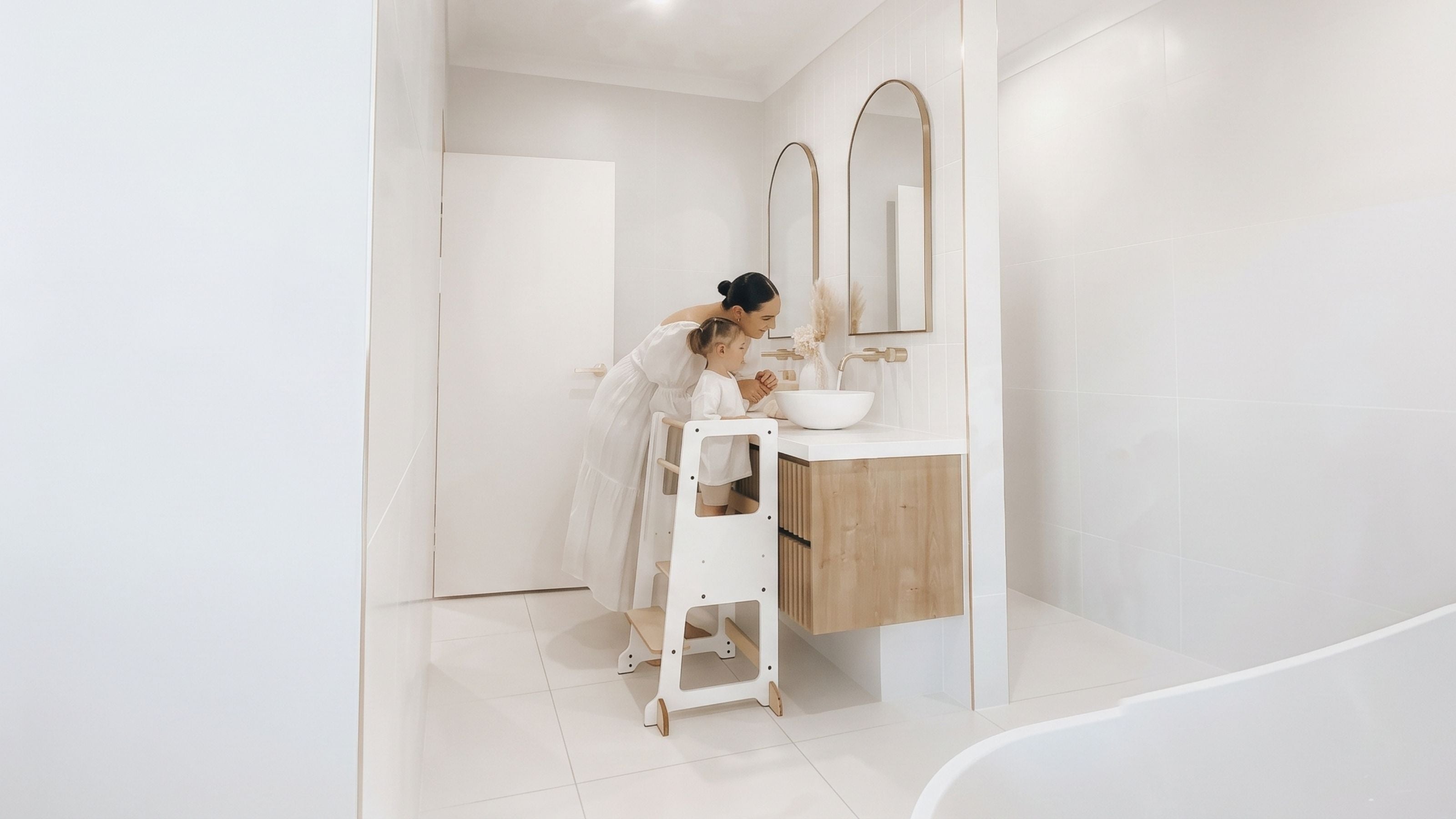
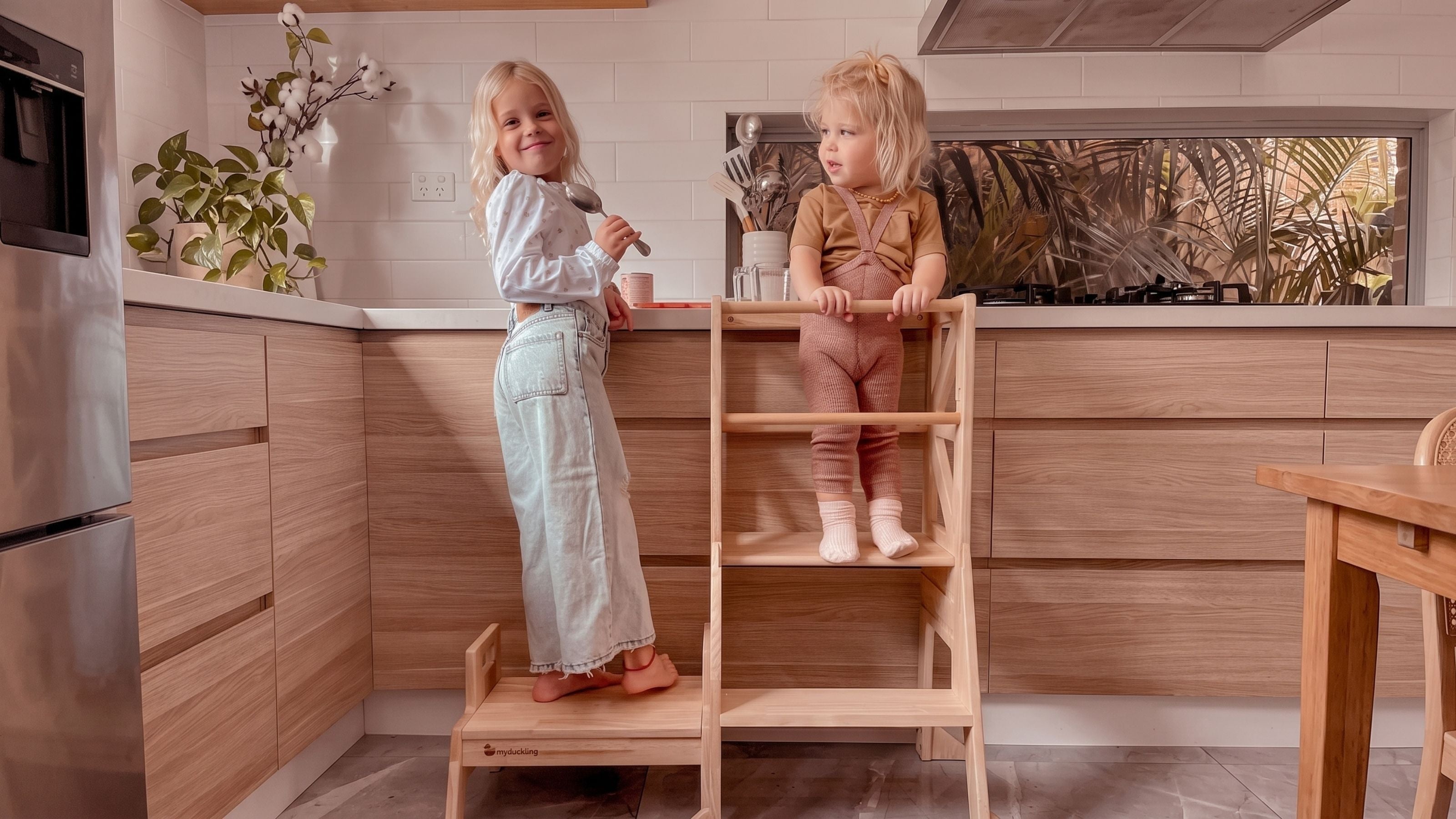
A kitchen tower is a height-adjustable platform with safety rails that lets toddlers stand at counter height to participate in kitchen activities, art projects, and everyday tasks alongside their caregivers. Unlike a regular step stool, a kitchen tower surrounds the child on multiple sides, reducing the risk of falls while encouraging hands-on independence — a core principle of the Montessori approach to early childhood development.
If you've been searching for the best kitchen tower for your toddler, you've probably noticed the market has exploded. Dozens of brands now offer towers ranging from $60 to over $300, with features like foldability, convertible designs, and adjustable height settings. This guide cuts through the noise. We break down exactly what to look for, compare the most popular options side by side, and help you choose the right tower for your family's kitchen, budget, and child's age.
In this Article:
What Is a Kitchen Tower and Why Do Toddlers Need One?
A kitchen tower — also called a toddler tower or Montessori-style helper tower — is a step platform enclosed by a safety frame. It brings children between approximately 18 months and 5 years old up to counter height so they can participate in cooking, baking, washing hands, and other daily activities that would otherwise be out of reach.
The concept draws directly from Montessori education philosophy, which emphasizes allowing children to engage in “practical life” activities at their own pace. Maria Montessori observed that children develop confidence, fine motor skills, and a sense of responsibility when they’re included in real household tasks rather than being kept on the sidelines.
Practical benefits parents report most often include:
-
Kitchen participation — Toddlers can wash vegetables, stir batter, and watch food being prepared, turning mealtimes into learning moments.
-
Independence at the sink — Hand washing and teeth brushing become self-directed rather than requiring a parent to lift the child every time.
-
Reduced tantrums — Many parents notice fewer meltdowns when toddlers can see and participate in what’s happening at counter level, rather than feeling excluded.
-
Fine motor development — Activities like pouring, mixing, and spreading build hand-eye coordination and grip strength.
A standard step stool can achieve similar height but lacks the surrounding safety rails that prevent a toddler from stepping backward off the edge. For children under 3, this distinction is significant — the American Academy of Pediatrics notes that falls are the leading cause of non-fatal injuries in children aged 1–4.
Key Features to Look for in a Kitchen Tower
Not all kitchen towers are built the same. Before comparing specific products, understanding these six criteria will help you evaluate any tower on the market.
1. Height Adjustability
The best kitchen towers offer at least two — ideally three or more — platform height positions. A tower with a single fixed height works for a narrow age range but becomes less useful as your child grows. Look for towers where the standing platform can be repositioned in increments of roughly 3–4 inches. This allows the tower to grow with your child from around 18 months through age 5 or 6.

2. Safety Standards and Stability
A quality kitchen tower should have a wide base that prevents tipping, even when a toddler leans to one side. Key safety features to check:
-
Anti-tip base width — The base should extend at least 1–2 inches beyond the standing platform on all sides.
-
Weight capacity — Most towers support 150–200 lbs, but verify the manufacturer’s rating.
-
Rail height — The top rail should reach at least your child’s waist when standing on the platform to prevent toppling forward.
-
Material safety — Look for non-toxic finishes (water-based paint or natural wood oil) and no small removable parts.
There is currently no specific standard from the ASTM International or the U.S. Consumer Product Safety Commission specifically for kitchen towers in the United States. However, reputable brands often voluntarily test their products under general furniture safety standards such as ASTM F2167 (youth seating) or other furniture stability guidelines. Always check whether a manufacturer provides third-party safety testing documentation.
3. Foldability and Footprint
Kitchen space is precious. Some kitchen towers fold flat for storage, reducing their footprint from roughly 18" × 18" to just a few inches deep. This is a major advantage in smaller kitchens or apartments. However, folding mechanisms can sometimes compromise structural rigidity, so check reviews for wobble or play in folding models.
Non-folding towers tend to be sturdier but permanently occupy floor space. If your kitchen has room for it, a solid non-folding tower often feels more secure underfoot.

4. Material and Build Quality
Kitchen towers are typically made from one of three materials:
| Material | Pros | Cons |
|
Solid hardwood (birch, beech, pine) |
Most durable, natural look, can be sanded and refinished | Heavier, higher price |
|
Plywood/engineered wood |
Lighter, more affordable, often smooth finish | Less durable long-term, can chip |
| Bamboo | Sustainable, strong-to-weight ratio, moisture resistant | Limited options on market |
Solid wood towers made from birch or beech are often valued for their durability and natural appearance, and many families find they last through multiple children while retaining good resale value.
Plywood or engineered wood towers are typically lighter and more affordable, making them a practical choice for many households. While they may show wear at high-stress points (such as platform edges or rail joints) over time, a well-constructed plywood tower can still provide several years of reliable daily use.
5. Convertible Designs
Some kitchen towers can convert into other furniture — such as a table and chair set, a step stool, or even a small desk. These 2-in-1 or 3-in-1 designs provide excellent value if space or budget is limited. The trade-off is that convertible towers may not excel at any single function, but they offer versatile use for growing families.
6. Age and Size Range
Most kitchen towers are designed for children aged 18 months to around 5 years, though the effective range depends on the tower’s height adjustment options. A platform range of 10" to 20" from the floor covers the broadest age span. Always check the manufacturer’s recommended age and weight limits, and measure your counter height — standard US kitchen counters are 36" tall, while bar-height counters at 42" may require a taller tower.
What Age Can a Toddler Start Using a Kitchen Tower?
Most manufacturers recommend starting at 18 months, but the right age depends more on your child’s physical development than their birthday. A child is ready for a kitchen tower when they can:
-
Stand independently for at least 30 seconds without support
-
Climb stairs with assistance, showing the leg strength to step onto the platform
-
Follow simple instructions like "hold on to the rail"
Some children meet these milestones as early as 15–16 months, while others may not feel comfortable until closer to 2 years. Starting too early — before a child can reliably stand and balance — increases the risk of falls, even with safety rails.
For younger children (15–20 months), choose a kitchen tower with the lowest possible minimum platform height so they don’t have to climb too far. A platform starting around 10" from the floor is ideal for early starters.
Upper age limit: Most children outgrow their kitchen tower between 5 and 6 years old, when they can reach the counter using a regular step stool or chair. Towers with a maximum platform height around 20" can extend their useful life by a few extra months.

Kitchen Tower Safety Tips Every Parent Should Know
A kitchen tower dramatically reduces fall risk compared to a step stool, but it’s not a substitute for adult supervision. These safety practices help prevent accidents:
-
Placement matters: Position the tower at least 12 inches away from the stove or any hot cooking surface. The ideal spot is at a countertop section used for food prep, not active cooking. If your kitchen layout brings the tower close to the stove, only use it when burners are off.
-
Teach the rules early: Before first use, show your child how to climb in and out safely. Practice the routine — climb up, stand on the platform, hold the rail — several times before using it during real cooking activities. Toddlers learn best through repetition.
-
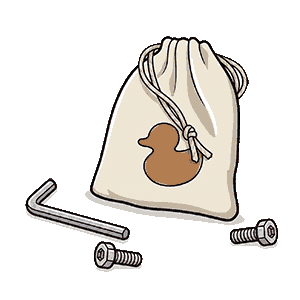
Check stability regularly: Wood joints can loosen over time, especially in towers that are folded and unfolded frequently. Give your tower a wobble test every month and tighten any hardware as needed. Most towers include an Allen wrench for this purpose.
-
One child at a time: Kitchen towers are designed for single occupancy. Two toddlers on one tower shifts the center of gravity unpredictably and may exceed weight specifications.
-
Surface matters: Place the tower on a flat, non-slip surface. On tile or hardwood floors, consider adding non-slip pads under the tower’s feet if they aren’t included by the manufacturer.
How to Choose the Right Kitchen Tower for Your Kitchen
Selecting the right kitchen tower comes down to matching your priorities. Here's a simple decision framework:
-
Foldable towers: Ideal for small kitchens or if you need to store the tower between uses, or move it easily between rooms.
-
Non-folding solid wood towers: Best if you have a permanent counter space, want maximum stability, or plan to use the tower for multiple children over time.
-
Convertible towers: Great for small apartments or if you want a piece of furniture that serves multiple purposes, such as a step stool, table, or desk.
-
Material matters: Prioritize solid wood over engineered wood if your budget allows — solid wood offers better durability and longevity, especially with daily toddler use.
Frequently Asked Questions
Q: Is a kitchen tower worth it?
A: For families with children between 18 months and 5 years, a learning tower is one of the most-used pieces of child furniture you can buy. It gets daily use during meal prep, hand washing, and creative activities. Most parents report it pays for itself in reduced meltdowns and increased toddler independence within the first week.
Q: Can I make a DIY kitchen tower?
Q: What is the best age for a kitchen tower?
Q: Are kitchen towers safe for 1-year-olds?
Q: Do kitchen towers fold up?





Leave a comment
This site is protected by hCaptcha and the hCaptcha Privacy Policy and Terms of Service apply.