



2-in-1 vs 3-in-1 Kitchen Tower: Which One to Choose
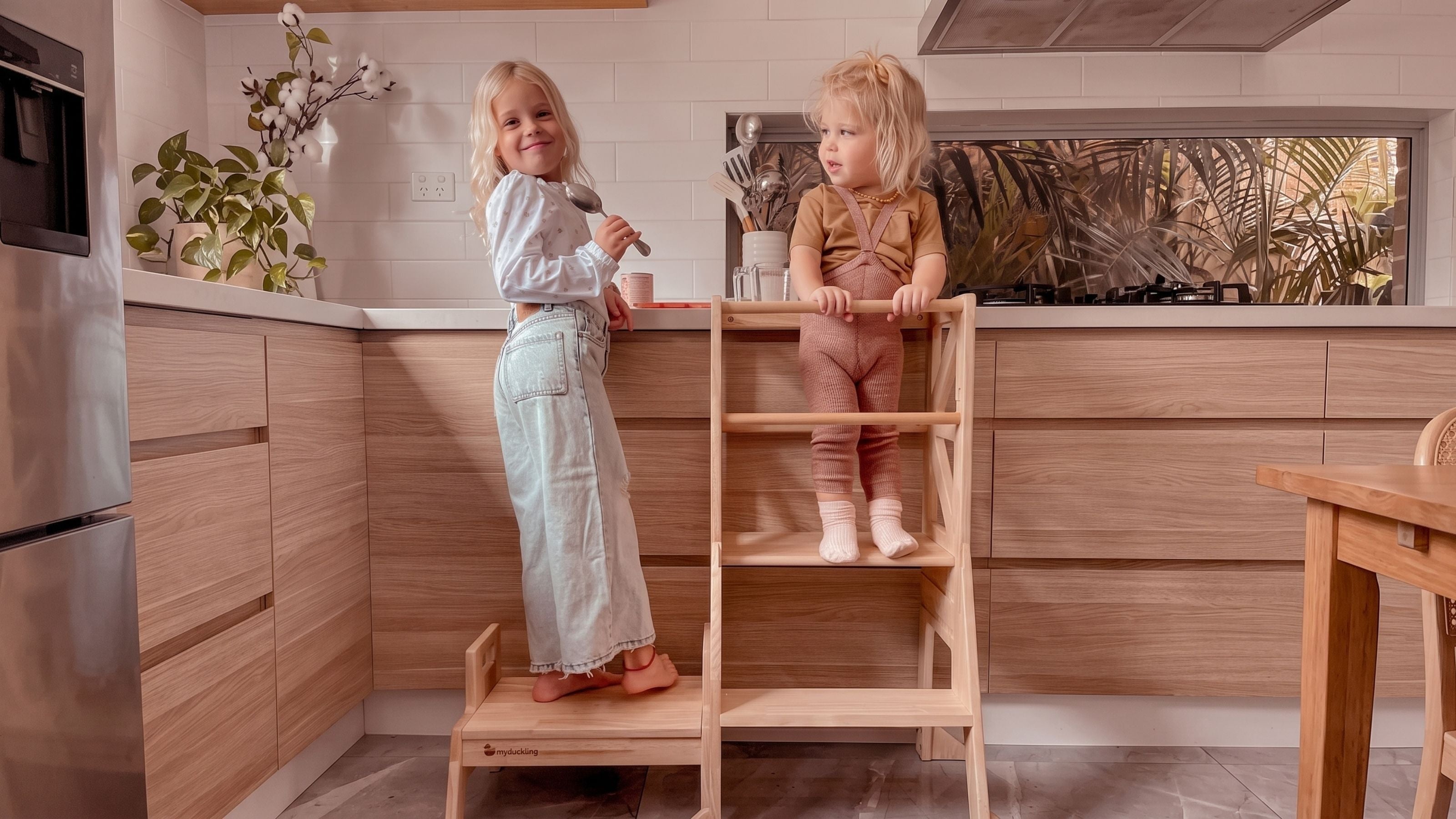
Shopping for a kitchen tower, you quickly run into the labels: 2-in-1, 3-in-1, deluxe. They are not marketing fluff, they describe what the tower turns into beyond a standing platform, and the difference changes how much use you get out of it. This guide explains what a 2-in-1 and a 3-in-1 kitchen tower each do, how they differ in practice, and how to decide which one fits your kitchen and your child.
In This Article:
- What the Numbers Actually Mean
- The 2-in-1: Tower Plus Drawing Board
- The 3-in-1: Tower, Stool and Board
- How to Decide Between Them
- What Every Good Tower Shares
- Frequently Asked Questions
What the Numbers Actually Mean
The number in the name counts the jobs the tower does. Every kitchen tower is first a safe standing platform that brings a child up to counter height. The extra numbers describe what else the same piece becomes when you reconfigure it or add the parts it ships with.
A 2-in-1 tower is a standing tower plus one more mode, usually a drawing board. A 3-in-1 tower adds a third: on top of the tower and the board, the frame reconfigures into a standalone step stool. So the count is really a shorthand for how many different ways the furniture works, from one purchase.
Neither is safer or better made on its own account; a well-built 2-in-1 and a well-built 3-in-1 share the same rails, side support and solid frame. The choice is about how many of those extra modes you will actually use, which comes down to your space and your child.

The 2-in-1: Tower Plus Drawing Board
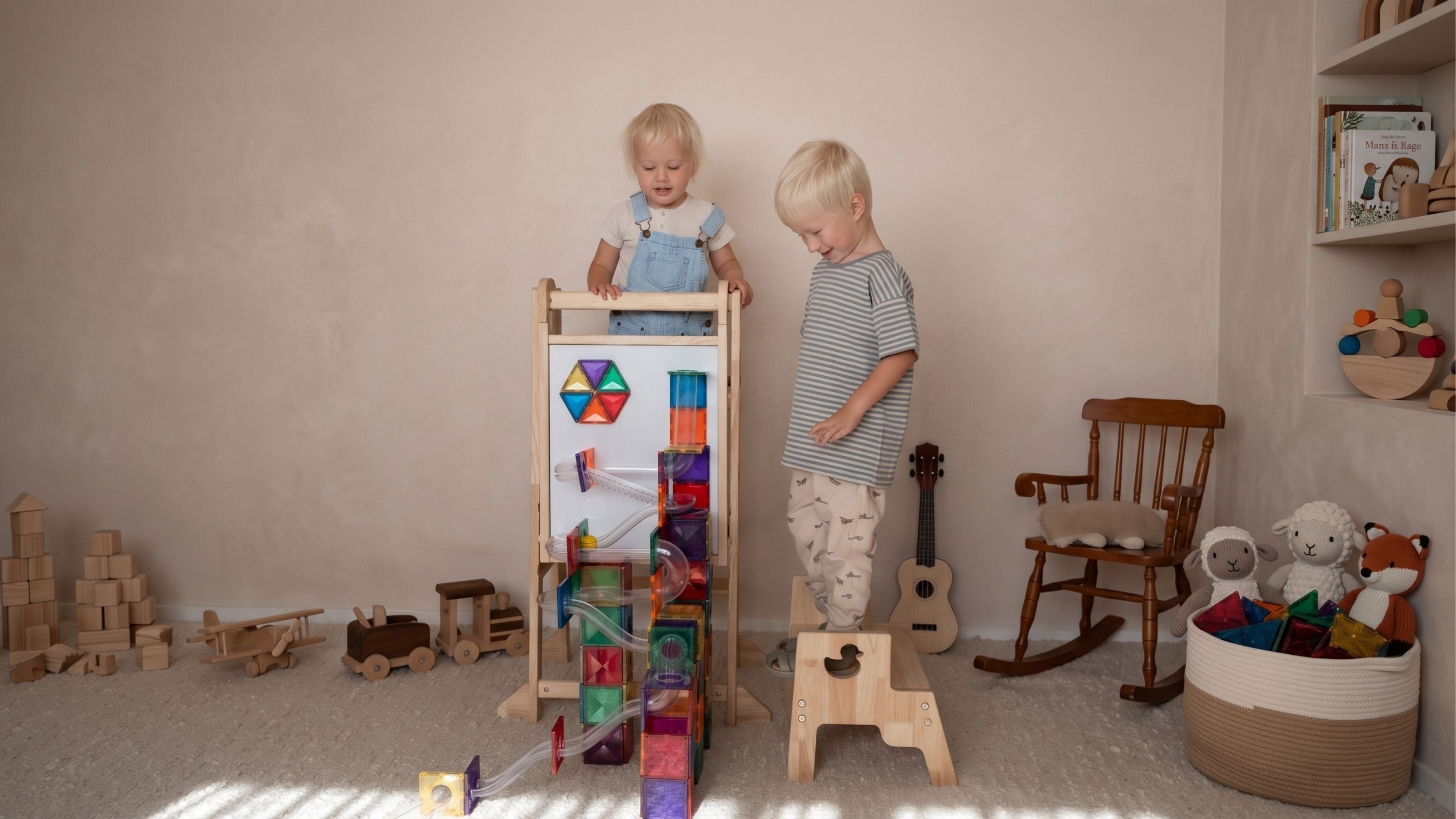
A 2-in-1 kitchen tower keeps things simple: a sturdy standing tower that also works with a double-sided drawing board, so the same piece is a spot to help at the counter and a place to draw. It is the setup many families find is all they need.
The LOLA Kitchen Tower is a good example. It is a solid rubberwood tower with front and rear safety rails, four removable side stabilizers and a reinforced rear support, and it comes with a removable board that is a magnetic whiteboard on one side and a chalkboard on the other. The platform sets to two heights, which covers a good span of the toddler and preschool years.
A 2-in-1 suits a family that wants a tower for the counter with a little creative play built in, without extra parts to store or reconfigure. If your child mostly wants to be up at the counter and the occasional drawing session is a bonus, the simpler setup is often the sensible pick.
The simplicity is worth more than it sounds. With nothing to take apart and rebuild, a 2-in-1 lives in one spot and is ready the moment your child wants to help, and there are no loose parts to lose or store between uses. For a busy household that is often the deciding factor: the tower that gets used is the one that is always set up and waiting, not the one that needs assembling first. Flipping the board from whiteboard to chalkboard is the only reconfiguring you do, and even that takes seconds.
The 3-in-1: Tower, Stool and Board
A 3-in-1 kitchen tower does everything the 2-in-1 does and adds a reconfiguration: the frame comes apart and rebuilds into a standalone step stool. That gives you a second, lower piece a child can use to reach a sink or a light switch, or to sit on, separate from the tower itself.
The JALA Deluxe Kitchen Tower works this way. It is a solid rubberwood tower with three platform heights and four removable side stabilizers, it includes the double-sided magnetic drawing board, and it reconfigures into a duck-handled step stool that slides under the tower for storage. Three platform heights, rather than two, also stretch the fit across a slightly wider range of ages.
A 3-in-1 suits a family that wants more from one purchase: a step stool for the bathroom or the light switch, a longer fit from the extra height setting, and the drawing board as well. It asks a little more of you in reconfiguring and storing the parts, in return for a piece that covers more jobs.
The extra height setting is easy to overlook but does real work over time. Two platform heights cover the years well enough, but a third gives you a middle step, so the jump from tallest to lowest is gentler and the tower keeps a child standing at a comfortable height for longer between adjustments. For a family planning to get years out of one purchase, that finer range is part of what the 3-in-1 is paying for, alongside the stool and the board.
How to Decide Between Them
A few practical questions sort out which one fits:
- Will you use a separate step stool? If a step stool for the bathroom sink or the light switch would earn its keep, the 3-in-1 gives you one without a second purchase. If not, that mode goes unused.
- How tight is your space? The 3-in-1's stool tucks under the tower, but you are still storing and reconfiguring parts. A 2-in-1 has less to manage.
- How much height range do you want? Three platform settings fit a wider span than two, which can matter if you want the longest possible run of use.
- Do you want a drawing board? Both of these include one; some simpler towers do not, so check what ships in the box.
There is no wrong answer, only a fit. A smaller kitchen with a child who lives at the counter leans toward the 2-in-1; a family that wants a stool and the longest span of use leans toward the 3-in-1. Either way you are buying the same core tower, so you can choose on how the extra modes fit your home rather than worrying that one is a safer or sturdier build.

What Every Good Tower Shares
Whichever count you choose, the things that make a tower worth buying are the same. Look for safety rails around the platform and side support so a child who leans is held in, a wide and solid frame that stays planted on the floor, rounded corners, and a platform an adult sets to the child's height.
Solid timber matters across all of them, because a tower is climbed on, leaned against and used daily for years. A frame rated to around 220 pounds is built to take that handling, and a water-based varnish keeps the surface pleasant for a child who has their hands all over it while they cook.
Once you have the tower home, the same rules apply to both: stand it on level ground against the counter, keep it to one child at a time, and stay close by at the counter. For the wider picture on choosing and using one, our guide to choosing a toddler tower and our note on the Montessori kitchen tower go deeper.
Frequently Asked Questions
What is the difference between a 2-in-1 and a 3-in-1 kitchen tower?
A 2-in-1 tower is a standing tower plus one extra mode, usually a drawing board. A 3-in-1 adds a third: the frame reconfigures into a standalone step stool on top of the tower and board. The number counts how many ways the same piece works.
Is a 3-in-1 kitchen tower better than a 2-in-1?
Not better, just more versatile. A 3-in-1 gives you a separate step stool and often an extra height setting, but asks you to store and reconfigure parts. A 2-in-1 is simpler to manage. The right one depends on how likely you are to use the stool and how tight your space is.
Do both towers come with a drawing board?
The LOLA 2-in-1 and JALA Deluxe 3-in-1 both include a double-sided board that is a magnetic whiteboard on one side and a chalkboard on the other. Some simpler towers sell the board separately, so it is worth checking what ships in the box.
Which kitchen tower is best for a small kitchen?
A 2-in-1 usually suits a tight kitchen, since it has fewer parts to store and reconfigure. A 3-in-1's stool does tuck under the tower, but there is still more to manage. If a separate step stool would not get used, the simpler tower is the easier fit.
Comparing setups? See the full range of kitchen towers and match the configuration to your kitchen and your child.





Leave a comment
This site is protected by hCaptcha and the hCaptcha Privacy Policy and Terms of Service apply.